The kit

Three sensors, and the difference between them.

A damp complaint is rarely settled by one reading. What settles it is the relationship between the air in the room, the surface it touches, and the weather outside. The kit measures all three at once, for a fortnight, so that relationship arrives as a dataset instead of an opinion.

In the box

Everything needed to monitor one room.

Internal ambient air sensor — temperature and relative humidity in the affected room
Internal surface sensor — the temperature of the wall the mould is growing on
External ambient air sensor — the same two readings, outside, on the same clock
A printed placement guide, and the packaging the kit goes back in
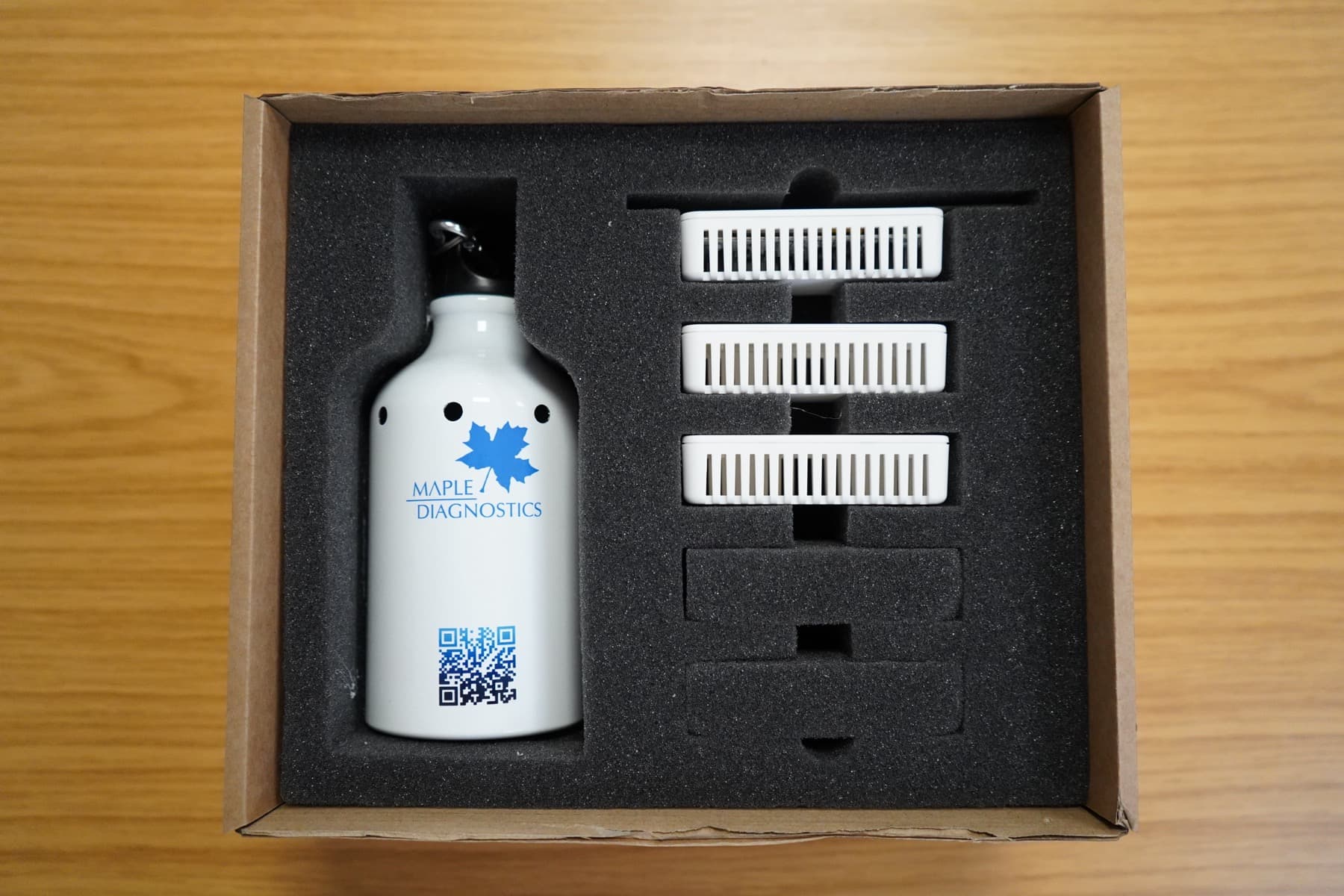
A Maple Diagnostics kit as it arrives: three sensors and a logger bottle, seated in foam in a shipping box.
The kit as it arrives, packed for a 14-day investigation.

Why three

Mould does not grow because a room is humid.

It grows where a surface stays cold enough, for long enough, to pull moisture out of the air touching it. Relative humidity on its own cannot show that. A room at 65% RH is unremarkable — the same room with a wall at 11°C and a dew point of 12.4°C is condensing every night, and it is the three readings together that resolve the difference.

Internal ambient air

Air temperature · relative humidity

Logged in the room the complaint is about. From these two readings the dew point is derived — the temperature at which that air has to give up its moisture as liquid water. It is the number every other reading is compared against.

Internal surface

Surface temperature

Placed on the coldest surface in the room: usually the external wall behind the mould, a window reveal, or a cold bridge at a floor or ceiling junction. Wherever this reading sits below the dew point, water is forming on that wall.

External ambient air

Air temperature · relative humidity

Outside the property, in shade, timestamped to the same clock as the other two. It is the control: it separates a fortnight of exceptional weather from a building that behaves this way in ordinary weather.

Dew point

The temperature at which air becomes saturated and moisture condenses out of it. It is derived from air temperature and relative humidity, so it moves with both — which is why opening a window on a cold, wet day can cool a wall faster than it dries the room, and make the condensation worse rather than better. Advice of that kind is the reason the finding needs the surface reading and the external reading, not just the room's humidity.

How it works

From a box on the doorstep to a finished report.

Five steps, and only two of them happen at the property. The analysis is the same whether the kit went out for a live complaint or has been in place for a year.

01

Order the kit

Choose a case investigation or ongoing monitoring and the kit is dispatched. Nothing is configured before it arrives — the sensors log from the moment they are placed.

02

Place the sensors

One visit, following the placement guide: ambient sensor in the affected room, surface sensor on the coldest wall, external sensor outside in shade. No wiring, no broadband at the property, and nothing for the resident to install or operate.

03

Leave it for 14 days

A fortnight is the shortest run that shows a pattern rather than a moment. It covers weekdays and a weekend, ordinary occupancy, and enough overnight cycles to tell a room that recovers each morning from one that never does.

04

Collect and upload

Retrieve the sensors and upload the logged data to the case. Readings land against the property, the room and the case they belong to, rather than into a spreadsheet that has to be reconciled afterwards.

05

Generate the report

The analysis runs over the dataset and produces the finding, the charts behind it and the actions proposed. Add your own logo, the photographs from the visit and your notes, and issue it.

3sensors per room — internal air, internal surface, external air
14days of continuous logging in a case investigation
2visits to the property: one to place the kit, one to collect it

In practice

What it asks of the property, and of the people in it.

Nothing asked of the resident

The sensors log on their own. No app, no account, no readings to write down, and no change to how the home is used — a fortnight of normal occupancy is exactly what the analysis needs to see.

Two visits, not a tenancy of them

One to place the sensors, one to collect them. Both fit inside the ten working days the investigation itself has to run in.

Evidence that predates the dispute

On ongoing monitoring the sensors stay in place rather than coming back after a fortnight, so a complaint arrives with months of history already behind it. The rest of the sequence is unchanged.

The limits

What the readings settle, and what they do not.

A fortnight of data can show that a surface sat below its dew point for hours at a time, night after night, in unremarkable weather. It cannot, by itself, say why that surface was cold: a missing cavity fill, a bridged lintel and a dead extractor fan can all draw the same curve. That is what the inspection, the photographs and the assessor's judgement are for — and the report keeps them alongside the readings rather than in place of them.

Get a kit into the room the complaint is about.

Order a case investigation and the kit ships with the case already open, or put the property on ongoing monitoring and hold the history before you need it.